Food & Beverage: A Primer
May 12, 2025

May 12, 2025
By Luis Fernando Lopes, Nazir Tarraf & Diego Firpo
BRIEF HISTORY, DEFINITIONS, AND KEY NUMBERS
The relationship between nutrition and the evolution of humankind is complex and intriguing. Beyond the obvious fact that any nourishing substance eaten, drunk, or otherwise taken into the body to sustain life, provide energy and promote growth is a prerequisite for the survival of the species, the supply and availability of food has proved a critical factor shaping the emergence, development, and, in some specific circumstances, the downfall of human civilizations through the ages.
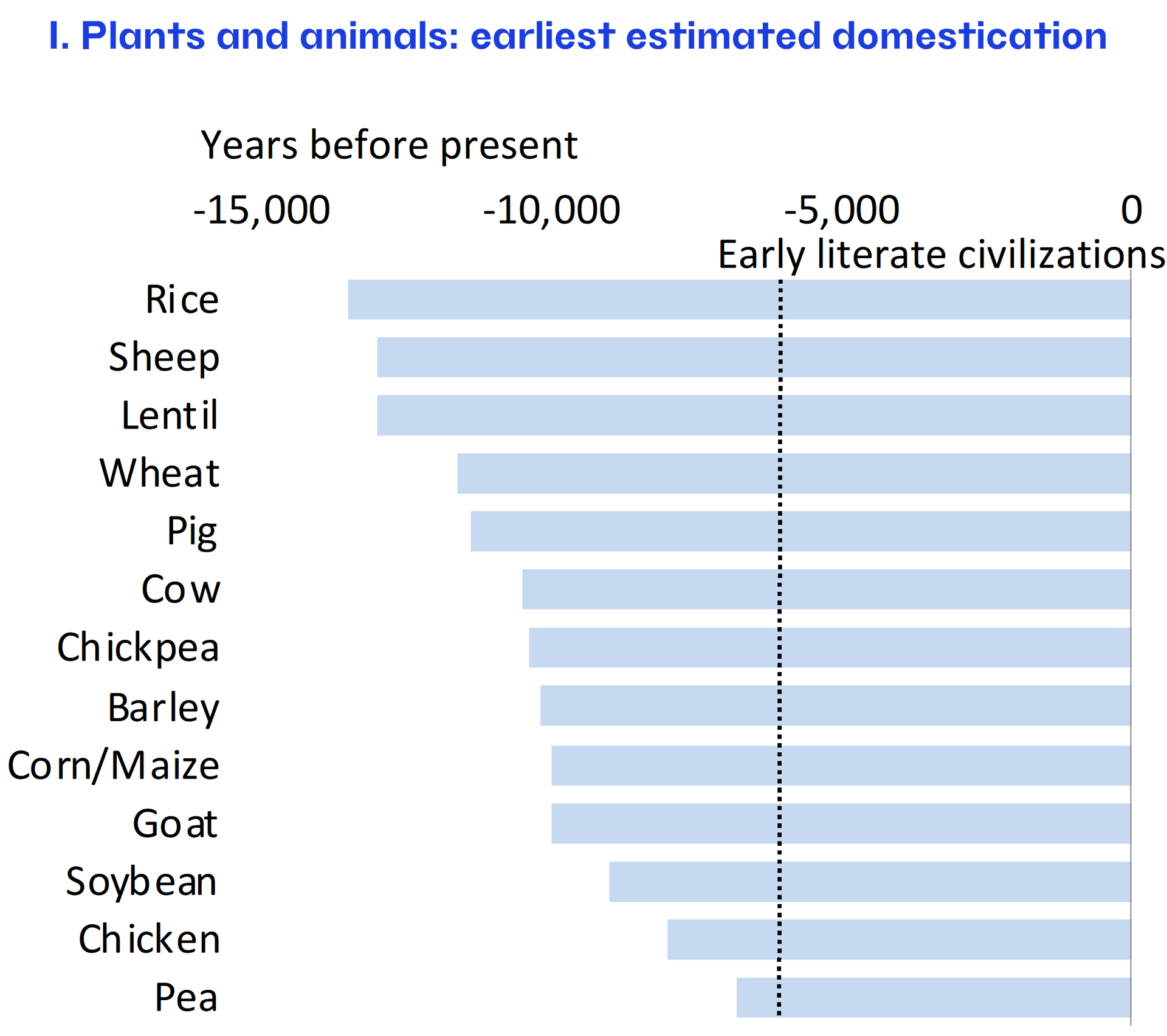
The introduction of the cooking of food, between one million and 500,000 years ago, correlates highly to the very evolution of Homo sapiens, as it has been linked to key changes in the human body, notably to the increase of brain size, as well as to the development of language and of more complex cognitive skills that were crucial to perfecting skills with a focus on adaptation.[1] Organized socioeconomic activities centered on producing food and beverage (F&B) emerged towards the end of the Pleistocene, some 13,000 years ago (Chart I). As the climate became more erratic, human societies could no longer rely solely on hunting and gathering. Against this backdrop, the domestication of plants of animals most likely proved the best strategy to mitigate the risk of potentially catastrophic nutrition shortages. Over millennia, these activities eventually gave rise to the greatest use of land and freshwater on the planet. Later, they also became an important cause of greenhouse gas emissions, along with other factors associated with climate change.
The mass of food and beverage items consists of only four components: water, carbohydrates, fats (from animals and plants), and proteins (idem). Also, a relatively small number of commodities provide the backbone for the global industry. As for vegetal products, the world holds about 200,000 species of higher plants, but only some 100 yield valuable domesticates and a mere 15 crops account for most of the worldwide supply. In the animal kingdom, the grand total is six: raw milk, pork, poultry, beef, mutton, and goat meat. Their environmental impact, on the other hand, varies sharply. Whereas one kilogram of pork provides 2,000 calories in terms of nutrition and on average requires for its production 86 megajoules of energy, nine square meters of land and 4,850 liters of freshwater, the respective numbers for one kilogram of paddy rice are 15 megajoules, three square meters and 2,300 liters of freshwater.[2] The gap between total supply of F&B and actual consumption, which is an accurate proxy for waste, is another eye-popping statistics. The estimated median share of calories by food group (weight-based) that are lost or wasted is 24%, ranging from 10% in oilseeds and pulses to 63% in roots and tubers.[3]
Note(*): not adjusted for inflation.
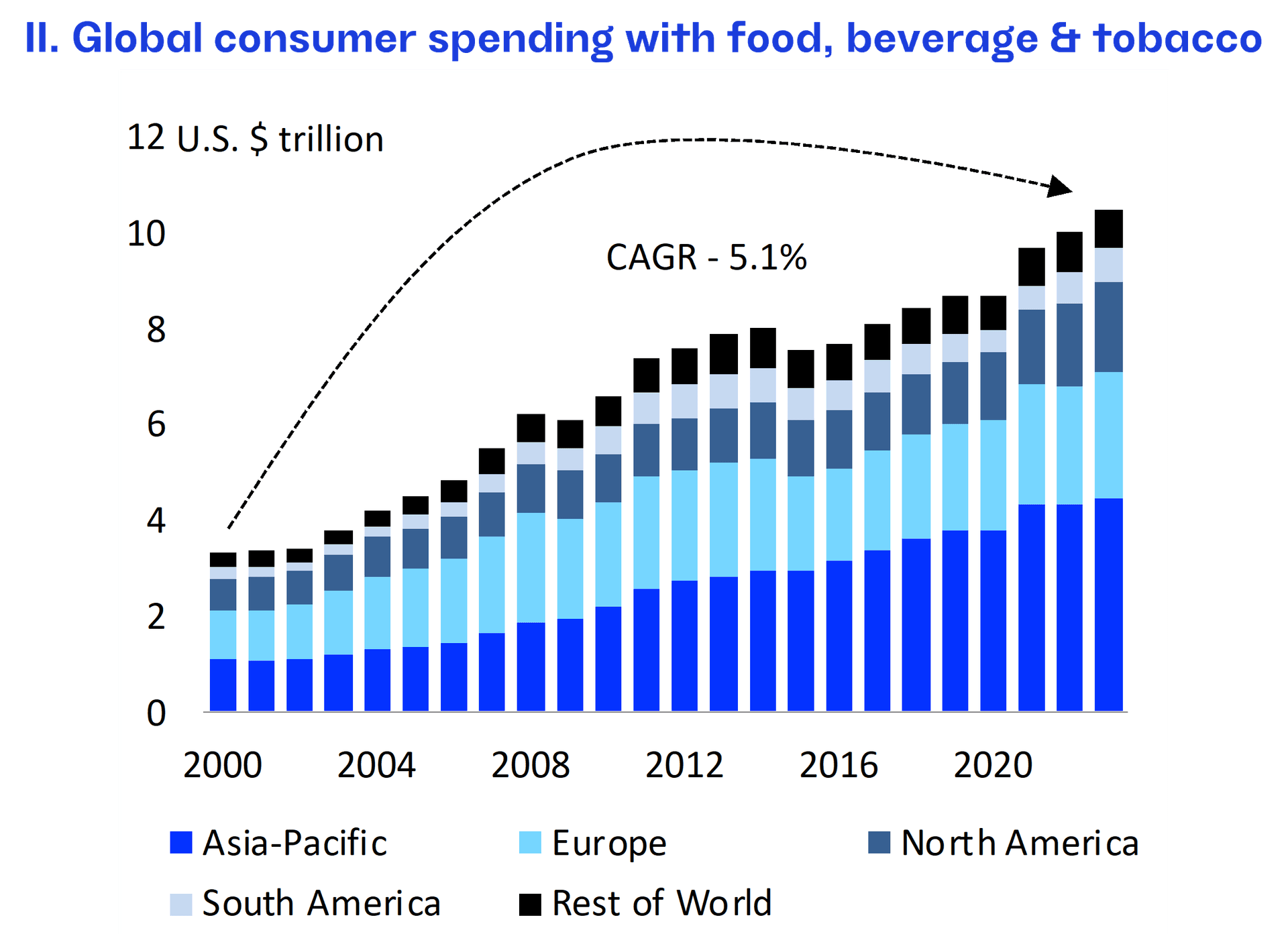
In its modern form, the F&B system is a complex international network of different businesses, notably crop-raising, livestock farming and fishery; processing (including preparation of fresh products for market); wholesale, warehousing and distribution; food services (including catering); and retailing (both online and offline). Admittedly, it is difficult to estimate the size of this industry because it overlaps with so many economic activities. In this context, a convenient methodology is to assess the market value of related items in price indices: producer, wholesale and consumer indicators. Thus, the usual metric of “Food, beverages & tobacco” was worth US $10.5 trillion in 2023, or 10% of world’s GDP, and its compound annual growth rate (CAGR) since the turn of the century is 5.1% (Chart II).
RELATIONSHIP WITH INFLATION AND ECONOMIC GROWTH
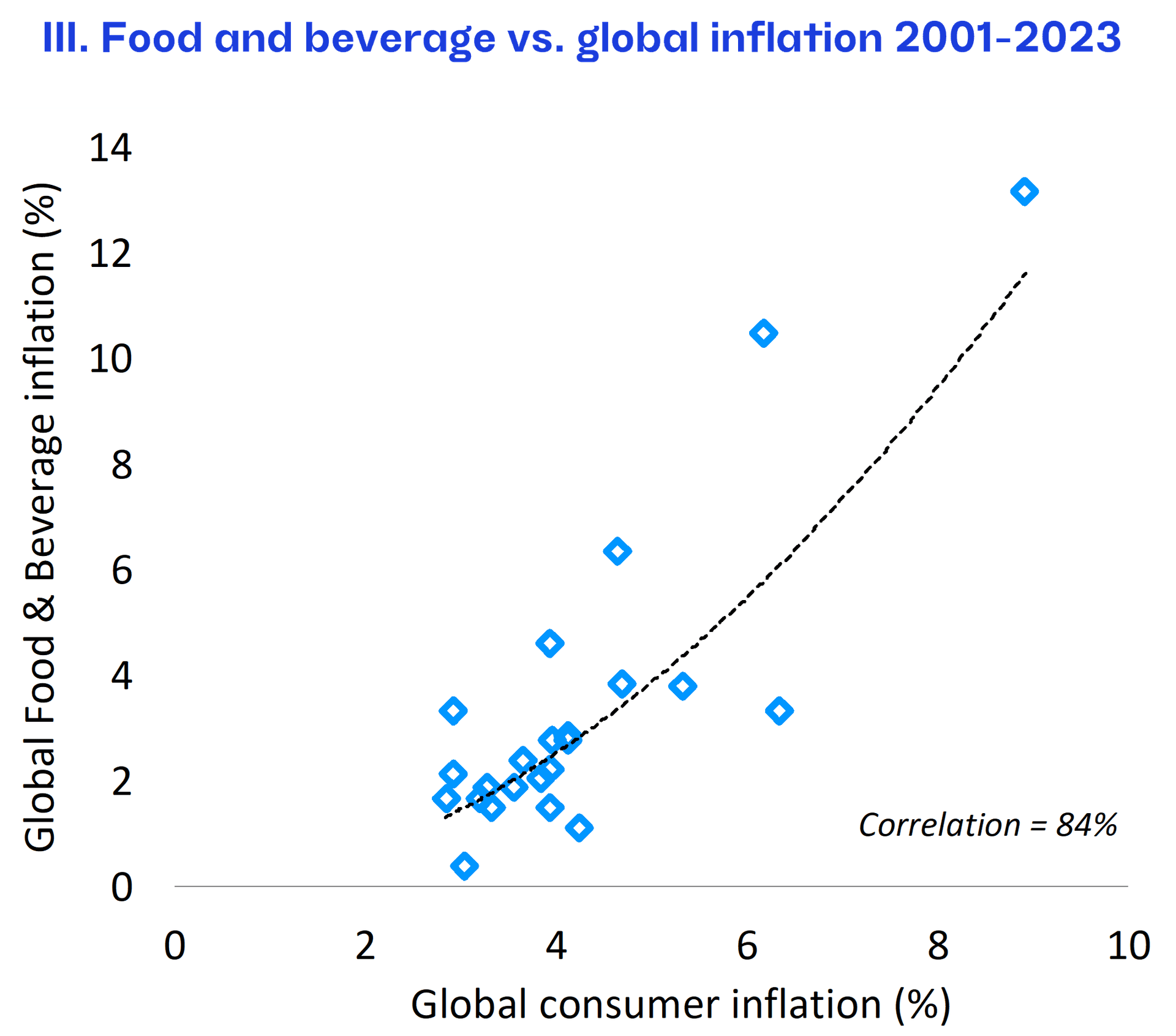
The CAGR of world consumer prices in the 21st century is 4.2%, therefore the real growth of the food and beverage system was almost 1% p.a. faster. And this is no small feat because of the asymmetric response to inflation situations (Chart III). In normal circumstances, F&B prices do not trigger inflation; they are laggards: CAGR of 3.3% over the past 23 years. Typically, higher energy costs or sharp currency depreciation are the harbingers of upward inflationary pressures. However, should adverse events like a negative supply shock in the agribusiness sector or in any other economic market occur, the pass-through effect in this industry is nonlinear. Since most of its products are basic consumption needs, in difficult times individuals and households adjust their purchasing plans and cut on other expenditure to continue consuming these critical items, even though they may have become considerably more expensive. Accordingly, while the global CPI rate galloped after the pandemic crisis to an accumulated rate of 23% from 2020 to 2023, F&B prices rose by 29%, despite the worldwide slump. Preciously few businesses show such ability to weather severe economic situations.
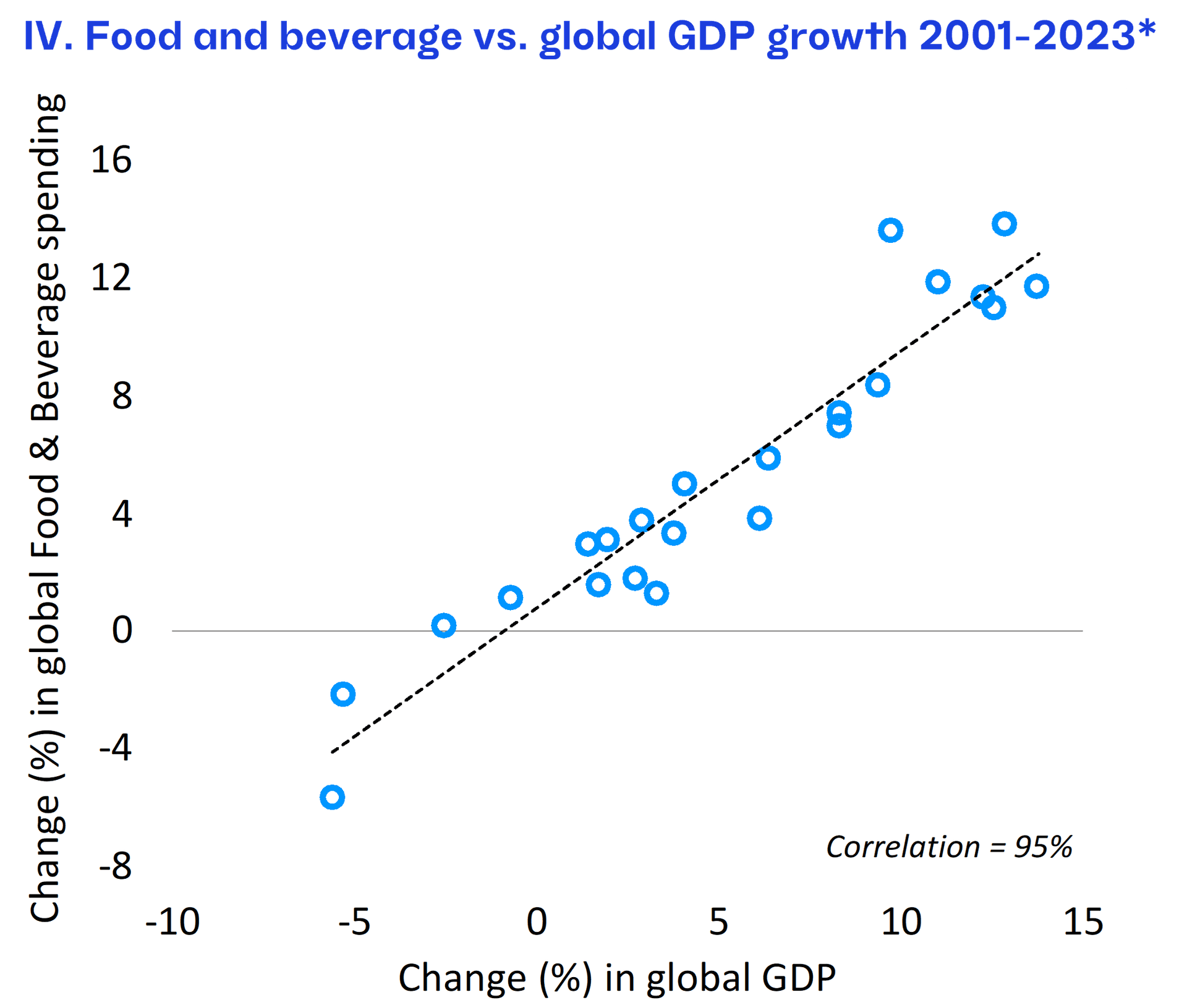
As for the relationship between food and beverage and economic activity, it is more linear, which speaks of more predictability (Chart IV). On average, F&B accounts for 19% of worldwide consumer spending. In relatively benign times featuring faster GDP growth and/or lower inflation, the share decreases to 17%-18%, thus making room for the consumption of other goods. Conversely, in hostile circumstances such as the pandemic crisis, it increases to 20%, elbowing out less critical expenditure items. Yet stability does not mean homogeneity across countries and the global variance is remarkable.
Taking the world’s two largest economies, the United States and China, the respective shares of food and beverage expenditures in total consumer spending are widely different: 9% and 31%. In Peru, a comparatively poorer nation in Latin America, the percentage is nearly 40%. And there is an objective reason for that. In Economics, the Engel’s Law posits the existence of a non-linear relationship between different stages of socioeconomic development and nourishment. Initially, an increase in incomes of the very poor leads people to buy more of the same food and beverage. Because at that stage they derive nutritional energy mainly from carbohydrates, additional growth in earnings allows them to gradually include more fats (plant and animal) together with proteins (idem) in their diet. However, that happens with a less than proportional increment in the total calory intake and with no significant change in individuals’ share of wallet. A transition to middle class or further up to wealthier ranks of society preserves the improved diet but the monies spent on it become a decreasing fraction of total receipts. In this context, affluent households tend to demand more durable goods and services.
Against this backdrop, a robust positive asymptotic correlation between per capita income and nutrition emerges, so much so that it allows precise estimates about the impact of socioeconomic development on the demand for food and beverage. Such relationship, in turn, allows valuable inferences about probable supply-side moves and the resulting market dynamics. On this basis, the largest quantitative changes in F&B consumption patterns take place in the range of incomes up to US $8,000 per year in 2021 prices (Chart V).[3] As for regions and countries, that signifies Africa, the Middle East, as well as South and Central Asia, along with China, which are developing economies but nevertheless account for three-fifths of the world’s population. In those geographies the key challenge is local supply trying to catch up with fast-growing demand for basic nutrition as populations increase their calorie intake - on average they are still barely above the recommended range of 2,000 to 2,500 calories per day for women and men, respectively.
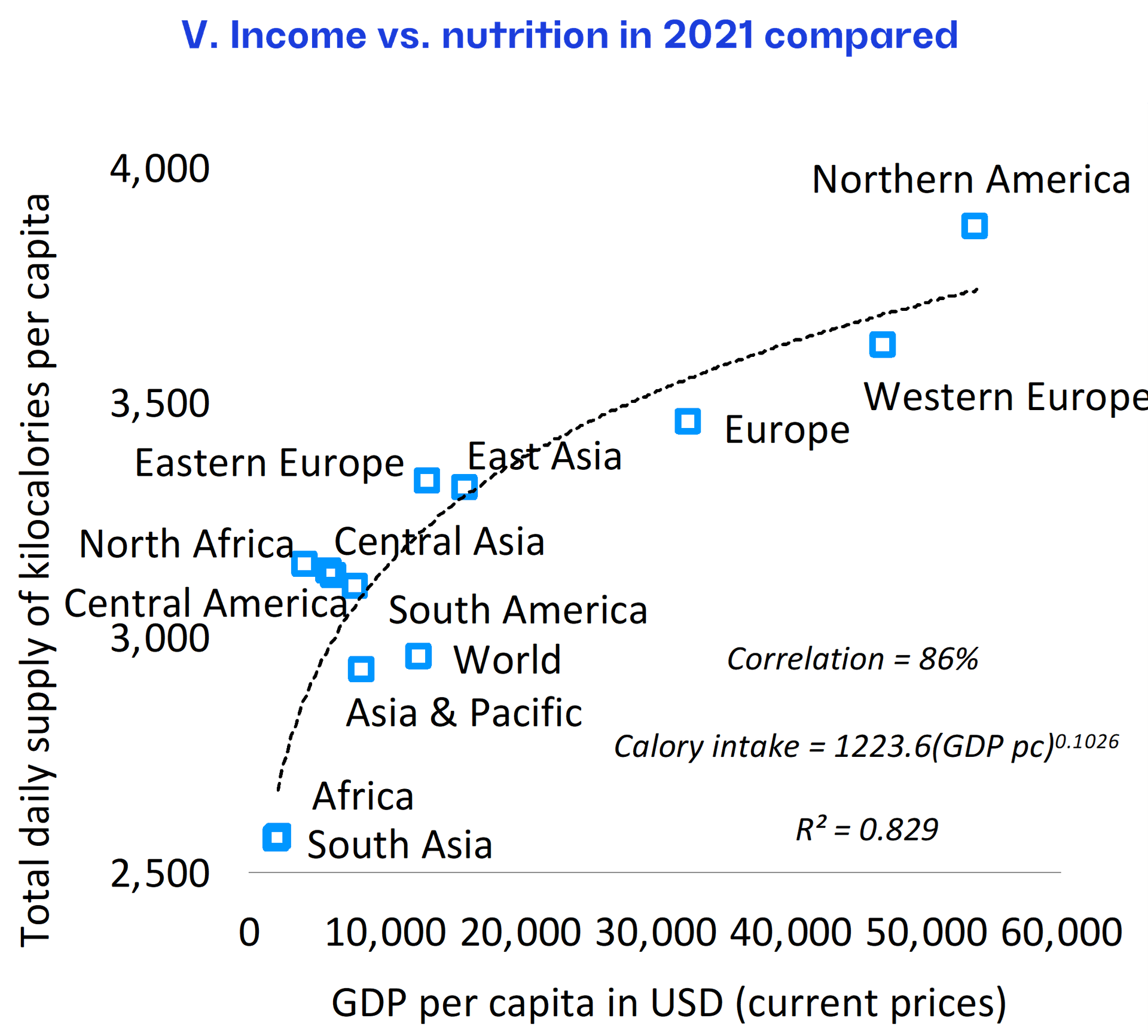
At the opposite end, saturation in terms of nourishment occurs when GDP per capita reaches US $20,000 per year or higher in 2021 prices. In Northern America, Western Europe, Oceania and Japan this is already the case. Of course, that is not saying that there is no hunger in those geographies. Owing to income inequality issues, the share of the population that is undernourished is minuscule but not zero: 2.5% in high-income economies compared to 28.3% in low-income countries, for instance.[4] In wealthier regions, the progression speaks of a qualitative shift: healthier, nutrition-conscious options are in high demand. The whole gamut of food and beverage-related activities is thus undergoing profound change.
In the range of incomes from US $8,000 to US $20,000 all the progressions described before are occurring at the same time. The buying of more of the same food and beverage is happening in regions such as Eastern Europe and Latin America because there are plenty of natural resources to produce them and the earnings of the lower classes are trending up. Also, there is the rising middle-class phenomenon, which results in a nutritional transition with increasing demand for energy-rich foods such as animal proteins along with those with a higher concentration of vegetable oils and sugars. And since higher income inequality in those geographies results in an affluent upper class, wealthier consumers are seeking healthier, sophisticated nutrition-conscious options. In this context, the Latin American service and retail sectors in F& B underwent changes from 1990 to 2000 that had taken 50 years to unfold in North America.
GLOBAL SUPPLY AND DEMAND GAPS IN FOOD & BEVERAGE
Over the past half century, relatively little new land has been converted to productive activities concerning agriculture and livestock. Therefore, most of the output increase results from improved yields but such developments have been quite uneven worldwide. Looking at markets, there are substantial gaps between supply – proxied by the share of the global food and beverage business - and demand – proxied by the share of world’s population – in specific regions (Chart VI). Asia-Pacific and Rest of the World (basically Africa and the Middle East) have excess demand, whereas Europe, North America and, to a lesser degree, Latin America, have excess supply, thus exporting their surpluses to countries running deficits.
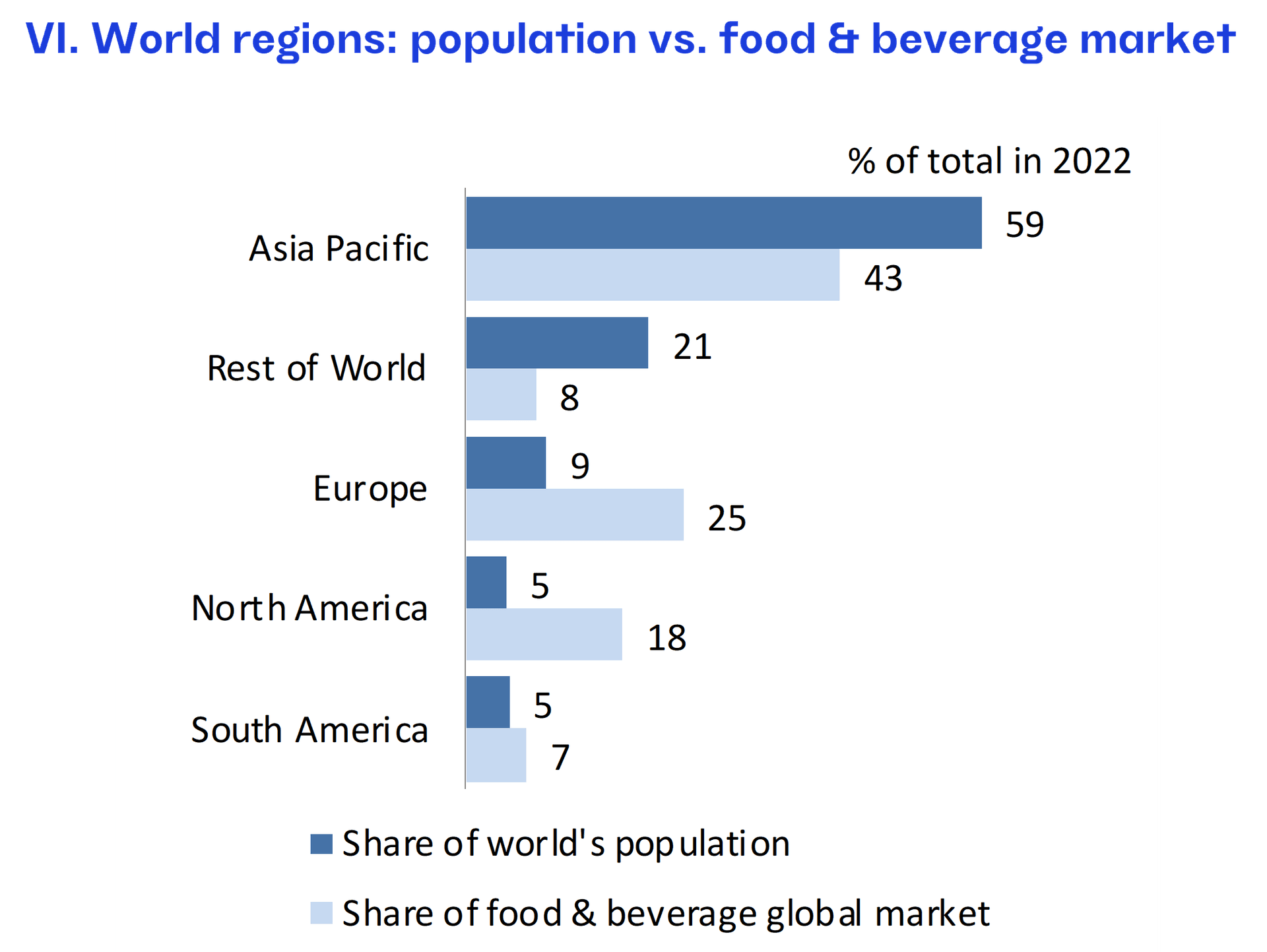
Obs (*): Brazil’s share of global population is 2.6% but it produces enough food to nourish 11% the humankind.
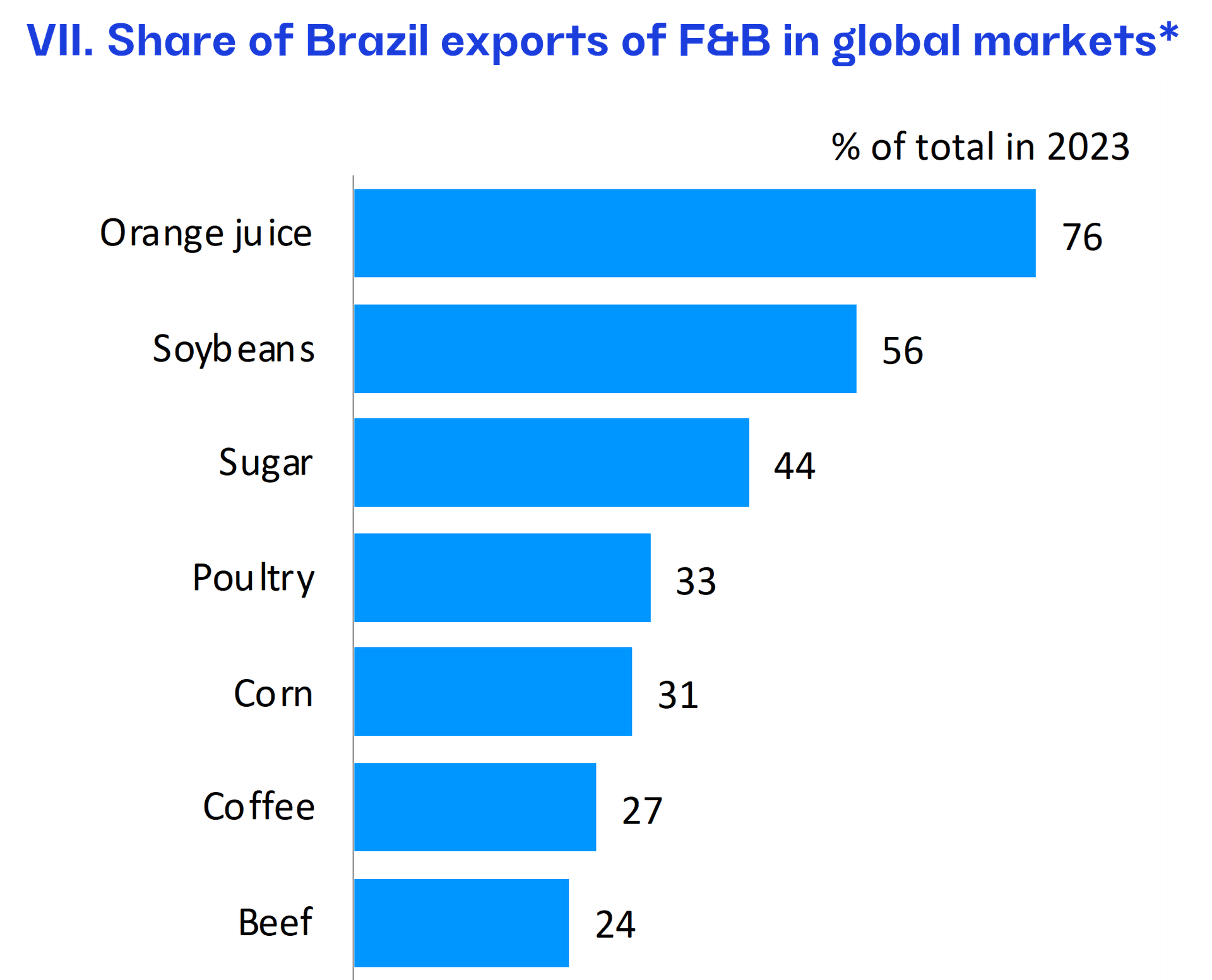
However, the outlook for the next decades is different. Since there is little room for further expanding land use in Western Europe, North America and Asia, the first two regions are likely to lose market share in terms of global F&B exports, while the third should become an even larger importer. On the other hand, the comparative abundance of natural resources in Sub-Saharan Africa and Latin America is expected to narrow the demand and supply gap in the African continent and substantially increase the surplus exported by Latin American nations, which have already become key exporters. Brazil, for instance, is one of the major global suppliers (Chart VII).
KEY TRENDS IN THE FOOD & BEVERAGE INDUSTRY
Wherever consumers have purchasing power to shape the evolution of the food and beverage industry, there have been a few overarching trends guiding farmers, distributors, transportation services, manufacturers, grocers, caterers, restaurants, and bars. Among the key developments, four are worth mentioning, as they generate growth over and above the average of the industry.
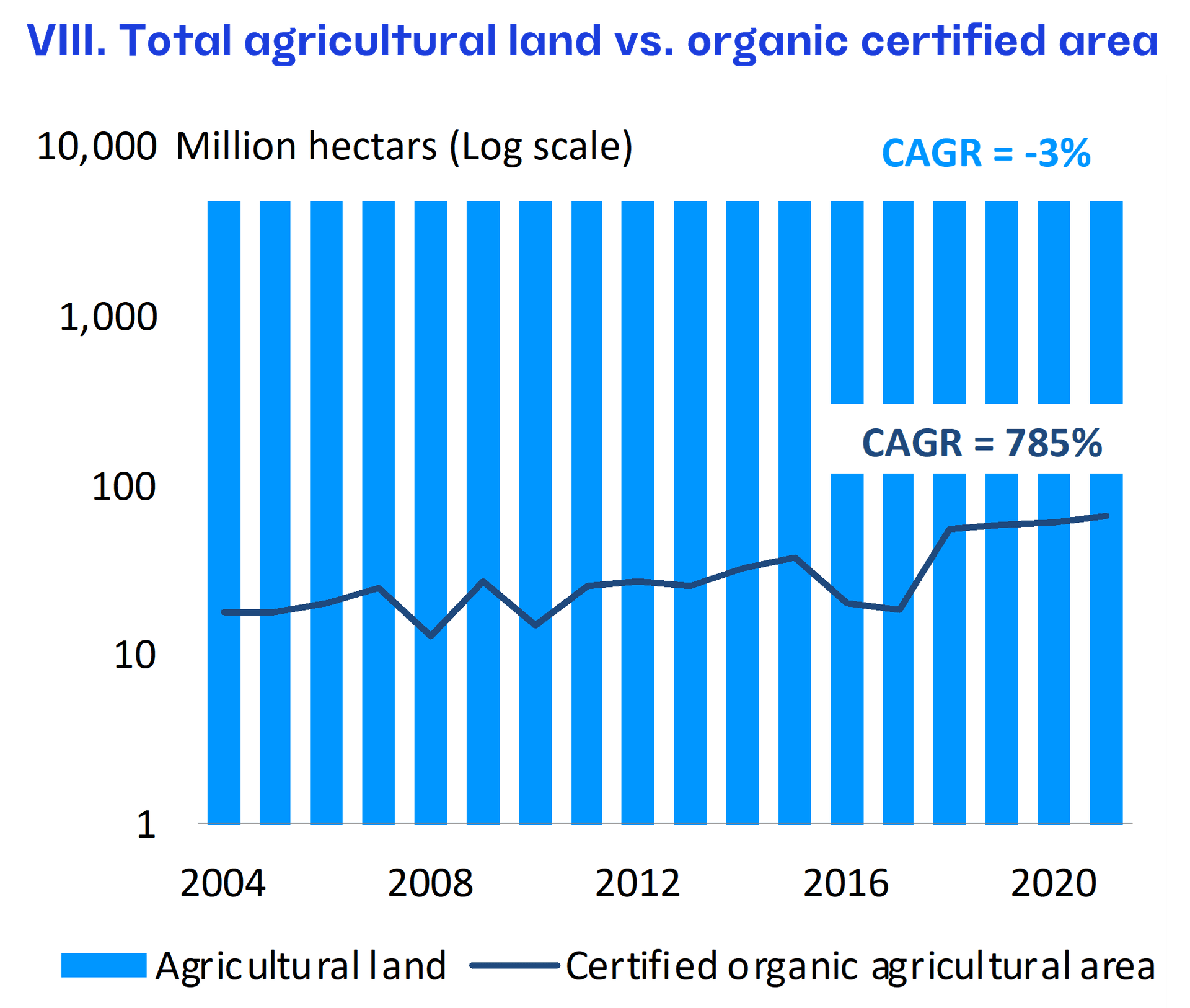
Health-conscious options and “clean labels”. Foods and beverages rich in essential nutrients such as vitamins and minerals are in high demand, along with organic, low-fat and plant-based options (Chart VIII). Also, people want to understand exactly what they are eating and drinking.
Farm-to-table approach. Ethical sourcing, sustainable farming and fishing, reduction of waste, and actions that show appreciation for environmental preservation have become a key component of the industry’s value chain.
Global cuisine. The growing popularity of ethnic cuisines, unique spices, authentic ingredients, distinct cooking techniques, and fusion dishes stands out as consumers have become more adventurous in their dining choices.
1 Frankopan (2023), pp.43.
2 Gerbens-Leenes, et alii (2010), pp. 598-99 and Diamond, J. (2002), pp. 700-702.
3 Gerbens-Leenes et alii (2010), pp. 605.
4 Ritchie et alii (2023).
Charts I, II, III, IV sources: Diamond, Economist Intelligence Unit, The World Bank, OECD, and Patria Research.
Charts V, VI, VII, VIII sources: Our World in Data, The World Bank, Economist Intelligence Unit, BTG Pactual, and Pátria Research.
BASIC REFERENCES
Diamond, J. (2002). “Evolution, consequences and future of plant and animal domestication”. Nature 418, 700–707.
Frankopan, P. (2023). The Earth Transformed: An Untold History. London: Bloomsbury Publishing.
Gerbens-Leenes, P. W., Nonhebel, S., & Krol, M. S. (2010). “Food consumption patterns and economic growth: Increasing affluence and the use of natural resources. Appetite 55, September, pp. 597-608.
Godfray H. C. J. et alii. (Eds.) (2010) “The future of the global food system” Philosophical Transactions of the Royal Society. B365, 2769–2777.
Lipinski, B., Hanson, C., Waite, R., Searchinger, T., & Lomax, J. (2013). “Reducing Food Loss and Waste: Creating a Sustainable Food Future - Installment Two. World Resources Institute.
Ritchie, H., Rosado, P. & Roser, M. (2023). “Hunger and Undernourishment”. Published online at OurWorldinData.org. Retrieved from https://
ourworldindata.org/hunger-and-undernourishment [Online Resource].
DISCLAIMER - Patria Investimentos may have had, may currently hold, or may build up market positions in the securities or financial instruments mentioned in this research piece. Although information has been obtained from and is based upon sources Patria believes to be reliable, we do not guarantee its accuracy and it may be incomplete or condensed. All opinions and estimates constitute Patria 's judgment as of the date of the report and are subject to change without notice. This report is for informational purposes only and is not intended as an offer or solicitation for the purchase or sale of any financial instrument. Any decision to purchase securities or instruments mentioned in this research must consider existing public information on such asset or registered prospectus. The securities and financial instruments possibly mentioned in this report may not be suitable for all investors, who must make their own investment decisions using their own independent advisors as they believe necessary and based upon their specific financial situations and objectives.